
Feeling like you can’t keep living this way is not the same as wanting to die. For most people, it reflects unsustainable emotional pain, a sign that depression, anxiety, trauma, complex PTSD, chronic stress, burnout, or another mental health condition has been building beneath the surface for longer than they realized.
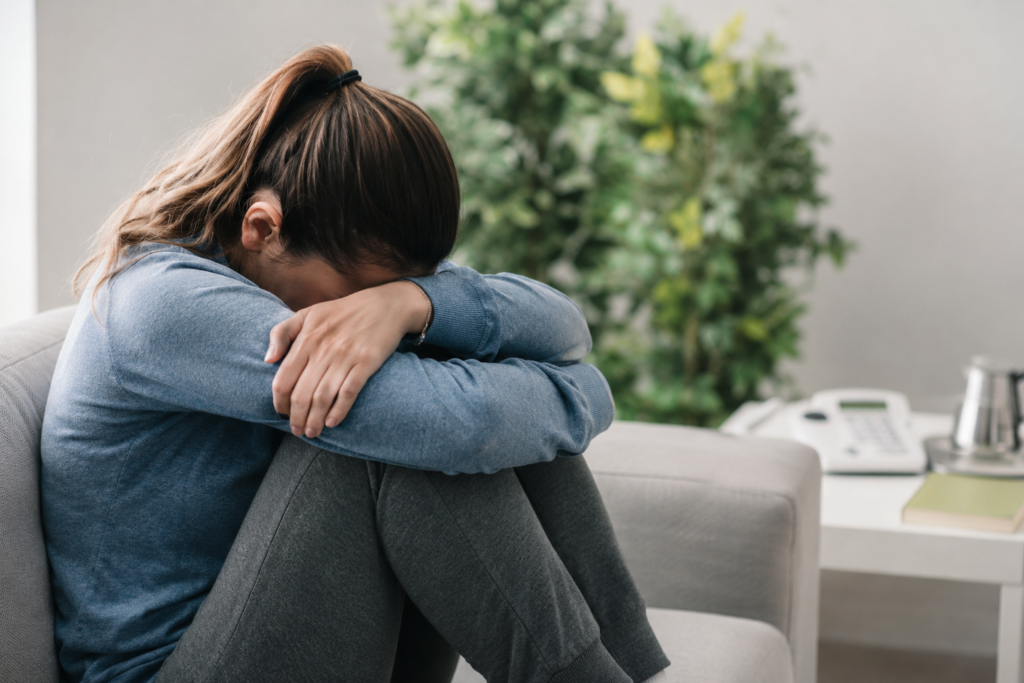
At The Raleigh House, clients often describe similar experiences beneath this feeling:
- Emotional exhaustion that does not improve with sleep or rest
- Losing interest in things that once brought comfort or relief
- Feeling disconnected from yourself or the people around you
- Constant anxiety, panic, or racing thoughts that make daily life harder
- Difficulty functioning at work, school, or home
- Coping through overworking, isolation, drinking, scrolling, or other survival behaviors
- Trauma or past experiences that continue affecting daily life in ways that are hard to explain
None of these experiences are character flaws. They are signs that something real is happening, and that you deserve clinical support.
When Should You Seek Professional Mental Health Treatment?
Many people experiencing depression, anxiety, complex PTSD, or emotional burnout become extremely good at continuing to function while privately struggling. They keep showing up for work. They continue caring for other people. From the outside, they may still appear high-functioning.
Internally, however, coping starts requiring more energy than a person actually has. The effort to keep everything together becomes exhausting on its own.
Consider professional mental health treatment when:
- Symptoms continue worsening despite outpatient therapy or self-care
- Daily functioning (work, relationships, self-care) has become difficult to maintain
- Trauma symptoms feel overwhelming or unresolved
- Emotional stability feels increasingly difficult to sustain
- Multiple attempts at managing on your own have not led to meaningful improvement
- You no longer feel safe or stable trying to handle things alone
Seeking help is not a sign of weakness. It is a recognition that what you are carrying deserves more support than you currently have.
If this resonates, our admissions team can help you understand your options. Contact The Raleigh House for a confidential conversation.
What Kind of Treatment Helps When Outpatient Therapy Is Not Enough?
When weekly therapy alone is not enough, a higher level of structured mental health care can provide the consistency, clinical depth, and daily support that outpatient settings cannot. Options include:
- Residential Program for Mental Health: A live-in level of behavioral health care designed for adults who need daily structure, clinical care, and support that outpatient treatment cannot currently provide.
- Partial Hospitalization Program (PHP): A higher level of daytime clinical support for people who need more intensive care than weekly therapy provides.
- Intensive Outpatient Program (IOP): Structured treatment several days a week while living at home or in supportive housing.
The right level of care depends on symptom severity, daily functioning, treatment history, and clinical needs. The Raleigh House admissions team can help you determine what fits.
What This Feeling Does Not Mean
It does not mean you are weak. Depression, anxiety disorders, complex PTSD, bipolar disorder, ADHD, and trauma-related conditions are not failures of discipline or effort. Many people struggling the most are also the people trying the hardest to hold everything together.
It does not mean you will always feel this way. Mental health conditions are treatable. With the right support, people stabilize, reconnect with themselves, and begin functioning differently. The way you feel today does not predict how you will feel with proper treatment.
It may mean you need a different kind of support. Recognizing that your current approach is no longer working can be one of the most important turning points toward lasting change.
How The Raleigh House Treats Depression, Anxiety, Trauma, and Complex Mental Health Conditions
The Raleigh House offers a residential behavioral health treatment program in Colorado that treats adults experiencing:
- Depression
- Anxiety disorders
- Complex PTSD and trauma
- Mood disorders
- ADHD
- Attachment-related challenges
- Neurodivergent presentations
The Raleigh House also treats clients managing co-occurring substance use disorders alongside primary mental health conditions, with fully integrated dual diagnosis care.
Unlike many treatment centers, The Raleigh House is one of the very few programs in Colorado that accepts adults seeking primary mental health treatment, even when substance use is not part of the clinical picture.
Why Clients and Families Choose The Raleigh House
Fully Licensed Clinicians and a 6:1 Ratio
All clinicians at The Raleigh House are fully licensed, well-tenured behavioral health clinicians. No interns or unlicensed personnel carry a caseload. The residential treatment program maintains a 6:1 client-to-clinician ratio or lower, which means more individualized attention, more consistent therapeutic relationships, and at least two individual therapy sessions per week.
Whole-Person Treatment: The East Meets West Approach
Treatment at The Raleigh House combines evidence-based clinical therapies with experiential and whole-person modalities designed to support emotional, psychological, and physical healing:
- Evidence-based therapies: Cognitive Behavioral Therapy (CBT), Dialectical Behavioral Therapy (DBT), EMDR therapy, trauma-focused therapy, psychiatric support
- Experiential therapies: Equine therapy, art therapy, movement and yoga, horticulture therapy (seasonally), a clinically interactive rock wall (used for attachment work and trauma processing)
- Wellness and nutrition: The Pro-Recovery Diet prepared by four full-time chefs (at The Ranch), mindfulness practices, emotional regulation skills
Mental health affects both emotional and physical well-being. That is why treatment focuses on the whole person, not symptoms alone.
Individualized Treatment Plans
Each treatment plan is built around a client’s history, symptoms, goals, and clinical needs. Structured programming runs seven days a week, including weekends. Recovery work does not pause for the weekend.
A Full Continuum of Care
The Raleigh House offers a full continuum of care so clients can step through treatment at the pace their clinical needs require:
- Detox and stabilization (when clinically indicated)
- 90-, 60-, and 30-day inpatient programs (90 days is the gold standard)
- Residential Program for Mental Health
- Partial Hospitalization Program (PHP)
- Intensive Outpatient Program (IOP)
- Supportive Housing
- Continuing Care
The 90-and-90 pathway, 90 days of residential treatment followed by 90 days of outpatient support, provides the strongest foundation for lasting change. Shorter stays can be clinically appropriate for some clients, and the right duration is always a clinical decision your treatment team helps determine.
If you are wondering whether residential treatment could help, our admissions team can walk you through what each level of care looks like. Contact our admissions team to learn more.
What to Expect When You Reach Out
Taking the first step can feel overwhelming. Here is what the process typically looks like:
- A confidential conversation: Our admissions team answers your questions, discusses your situation, and helps determine what level of care may fit.
- Insurance and logistics: We help you understand coverage, timing, and what to expect before arriving.
- Clinical assessment: Once you arrive, your treatment team completes a thorough evaluation to build a plan specific to your needs.
- Active treatment: Daily clinical and experiential programming designed to help you stabilize, process what you have been carrying, and build skills for lasting change.
- Continuing care: Treatment does not end at discharge. Continuing care and alumni support help you maintain progress after you leave.
You do not have to have everything figured out before reaching out. That is what our team is here for.
Frequently Asked Questions
Is “I can’t keep living like this” a sign of a mental health crisis?
It can be. For many people, this thought reflects unsustainable emotional pain rather than suicidal ideation. It is a signal that your mental health needs more support than you are currently receiving. If you feel unsafe, call or text 988 immediately.
Do I need to have a diagnosis to enter residential treatment?
No. Many clients arrive without a formal diagnosis. The clinical and medical team at The Raleigh House completes a thorough assessment during intake and builds a treatment plan based on your symptoms, history, and goals.
Can I get residential mental health treatment if I do not have a substance use disorder?
Yes. The Raleigh House is one of the very few programs in Colorado that accepts primary mental health clients without requiring a co-occurring substance use disorder. You do not need a substance use history to receive residential-level care.
How long does treatment last?
Programs are available in 90-, 60-, and 30-day formats, with 90 days recommended as the gold standard for building a strong foundation. The right duration is a clinical decision, and your treatment team will help determine what fits your situation.
What therapies are used?
Treatment includes CBT, DBT, EMDR, trauma-focused therapy, psychiatric support, equine therapy, art therapy, movement therapy, horticulture therapy (seasonally), nutritional support, and mindfulness practices.
Two Colorado Treatment Environments: Your Choice
The Raleigh House offers two distinct treatment environments. Both provide the same clinical standard and offer the full continuum of care. The difference is the setting, and the choice belongs to you.
The Ranch at The Raleigh House
A 40-acre nature-immersive property in the Colorado countryside, 30 minutes from downtown Denver. Treatment includes equine therapy, horticulture therapy (seasonally), a clinically interactive rock wall, outdoor experiential programming, and a Pro-Recovery Diet prepared by four full-time chefs. The Ranch offers space and stillness for deep recovery work.
The Center for Integrative Behavioral Health
An accessible environment in the Denver Tech Center, close to the city and families. Treatment includes infrared sauna, halotherapy, vibroacoustic therapy, a state-of-the-art gym, and a clinically interactive rock wall. The Center brings the same East Meets West clinical model to the city.
Both locations deliver the same clinical standard. The primary difference is the environment that feels right for you.
You Do Not Have to Keep Living Like This
If something about the way you are living, coping, or surviving no longer feels sustainable, that is not a personal failure. It is information. And it is worth listening to.
You do not have to wait until things fall apart, and you do not have to manage this alone. The right level of support can change things.
Contact our admissions team to talk with someone about your options, insurance coverage, and next steps. No pressure, no judgment. Just a conversation about what could help.
This Is Your Time.
If you or someone you love is in crisis:
- 988 Suicide and Crisis Lifeline: Call or text 988
- SAMHSA National Helpline: 1-800-662-HELP (4357)
- If there is immediate danger or a medical emergency, call 911 or go to the nearest emergency department.